KM ~560 · as far as Merzouga — Erg Chebbi
15 Days / 14 NightsDeparts from Casablanca
15-Day Grand Tour from Casablanca
The definitive journey: two weeks for all of Morocco, from the blue of Chefchaouen to the dunes and the ocean at Essaouira.
The route
Day by day
Indicative itinerary: every journey is tailor-made together with you.
Day 01 · Casablanca · ~30 m
Arrival in Casablanca on the Atlantic
Drive — airport welcome & transfer
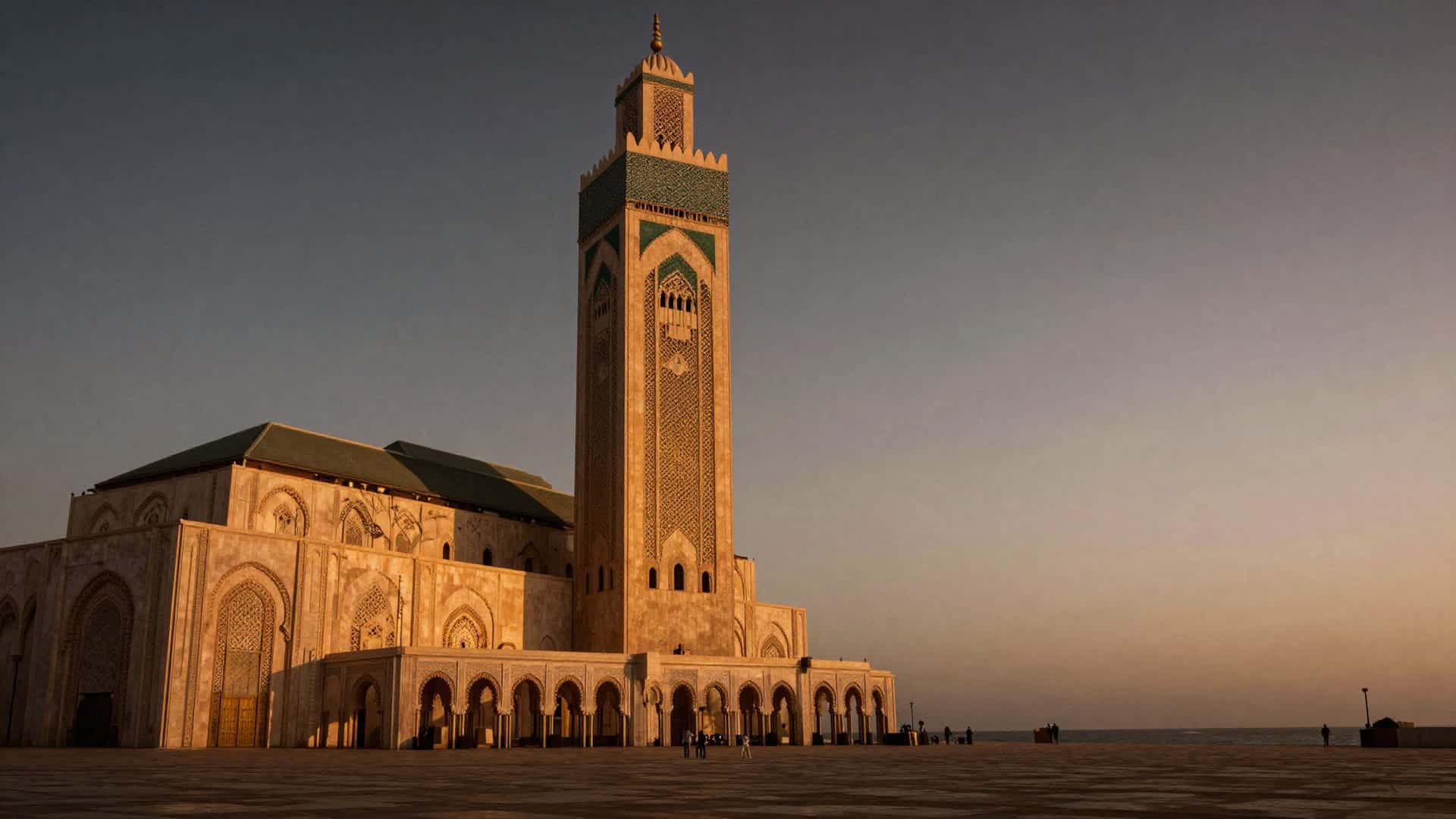
Morocco greets you from its most modern city, facing the Atlantic and made immortal by a film that was never actually shot here. We bring you to your hotel and, if the hour allows, to the Hassan II Mosque: completed in 1993, it stands partly over the water and its minaret nears seven hundred feet — the tallest in the world — a wave of marble and zellige that gathers twenty-five thousand worshippers. Casablanca is no postcard: it is the Morocco that works, among faded art-deco façades and crowded cafés. You walk the Corniche as the ocean throws itself at the rocks and the sun drops into the water; tomorrow you head inland, but tonight the sound of the waves and the salt air are enough.
Overnight · hotel in Casablanca
- Hassan II Mosque
- The Corniche
- Habous Quarter
- Art-Deco Façades
Day 02 · Chefchaouen · 564 m
From Casablanca to Chefchaouen via Rabat
Casablanca → ChefchaouenDrive — approx. 235 mi / ~5.5h
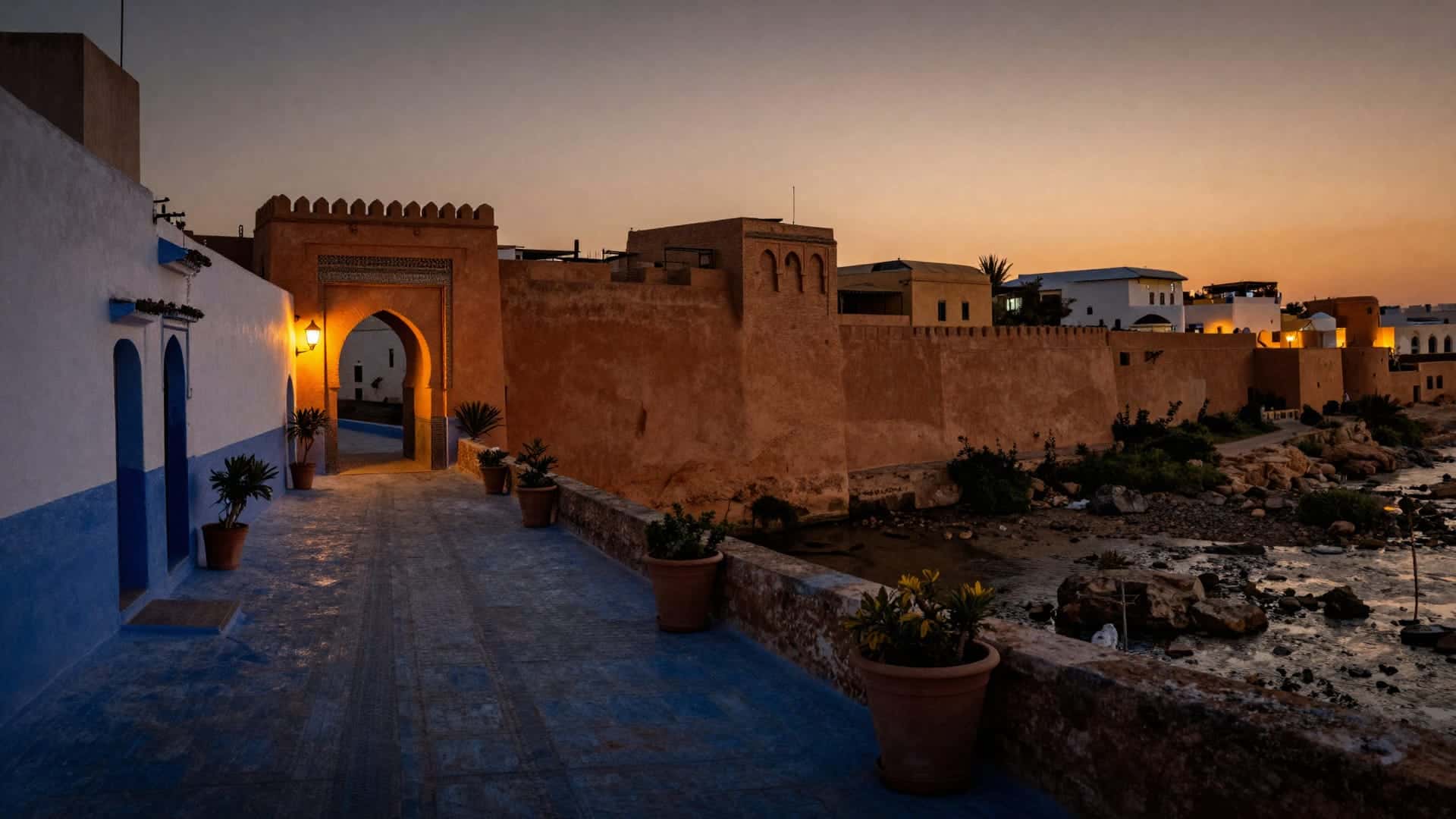
The grand tour begins by following the coast up to Rabat, a calm, green capital on the Bou Regreg: the Hassan Tower, a minaret unfinished since 1199, watches over a field of stub columns; opposite, the Mausoleum of Mohammed V glows with onyx, and in the Kasbah of the Oudayas the blue-and-white lanes tumble toward the Atlantic; storks nest on the Chellah ruins. Then the road turns inland and climbs to the foot of the Rif, where Chefchaouen appears, the 'Blue Pearl', founded in 1471 as a stronghold against the Portuguese. You arrive in the late afternoon, when the indigo lanes hold the last light like water, and you understand why no one can quite photograph it enough.
Overnight · guesthouse in Chefchaouen
- Hassan Tower, Rabat
- Chellah Ruins
- Arrival in Chefchaouen
Day 03 · Chefchaouen · 564 m
The Blue Pearl, All Day Long
Drive — on foot within the blue medina
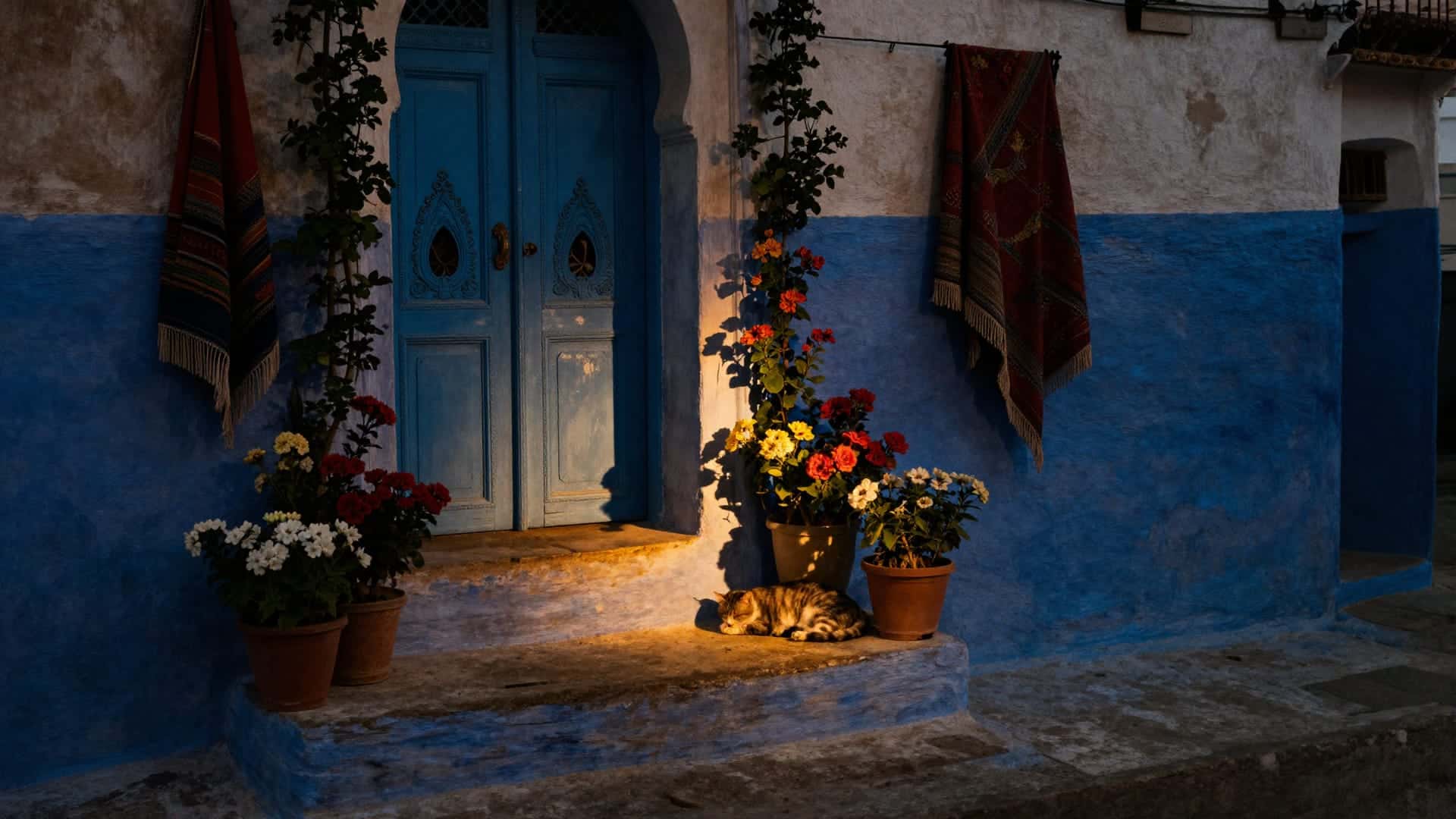
A whole day to inhabit Chefchaouen rather than cross it. You lose yourself among the indigo stairways, the terracotta pots, the cats in the sun and the painted doors, while Rif women pass in their pom-pom straw hats. You climb to the 15th-century Kasbah, with its Andalusian garden and small ethnographic museum, and hear the story of the town that took in Jews and Muslims fleeing Spain. You walk to the Ras el-Maa spring, where washerwomen spread cloth on the rocks, then to the Spanish Mosque viewpoint for the wide view. At sunset, when the whole blue town glows gold against the Rif peaks, you sit with a mint tea and want for nothing more.
Overnight · guesthouse in Chefchaouen
- Uta el-Hammam Square
- Chefchaouen Kasbah
- Ras el-Maa Spring
- Spanish Mosque Viewpoint
Day 04 · Fes · 414 m
Roman Volubilis and Meknes on to Fes
Chefchaouen → FesDrive — approx. 125 mi / ~4h
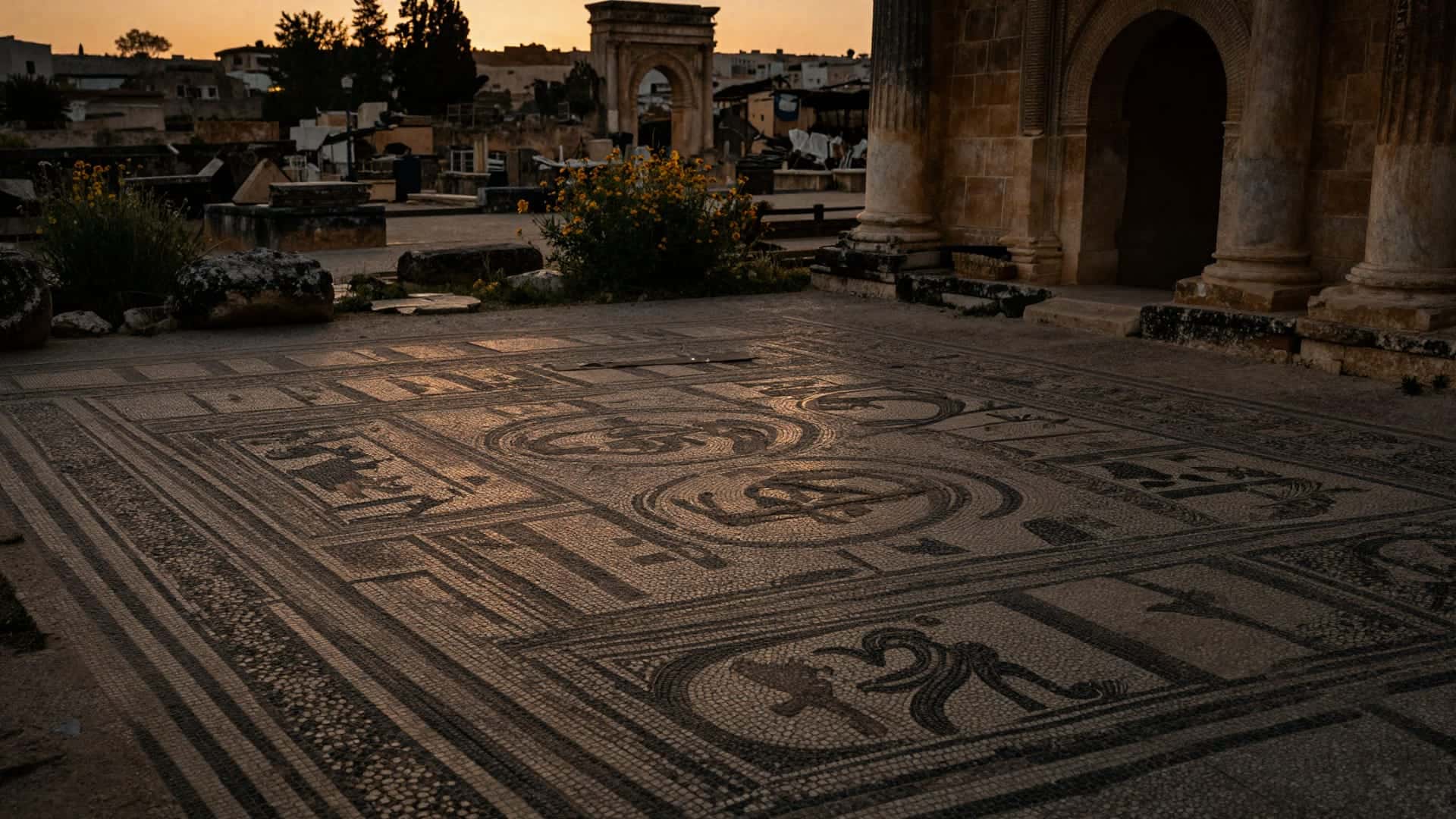
You leave the blue of the Rif and drop toward the plain, stopping at Volubilis, the southernmost Roman city of North Africa: here, between the 1st and 3rd centuries, an olive-oil town flourished, and today the Arch of Caracalla, the forum and above all the mosaics still lie open to the sky, vivid after eighteen centuries — Orpheus, the labours of Hercules, a chariot drawn by peacocks. A few miles on stands Moulay Idriss, a holy town perched on two hills around the tomb of the founder of the first Moroccan state. You pass Meknes and its Bab Mansour before making for Fes. You arrive as the sun sets over the nine thousand lanes of the medina, already catching the smell of cedar and of bread baked in the neighbourhood ovens.
Overnight · riad in the Fes medina
- Volubilis (UNESCO)
- Roman Mosaics
- Moulay Idriss
- Bab Mansour, Meknes
Day 05 · Fes · 414 m
Inside Fes el Bali: Madrasas and Tanneries
Drive — on foot within the medina
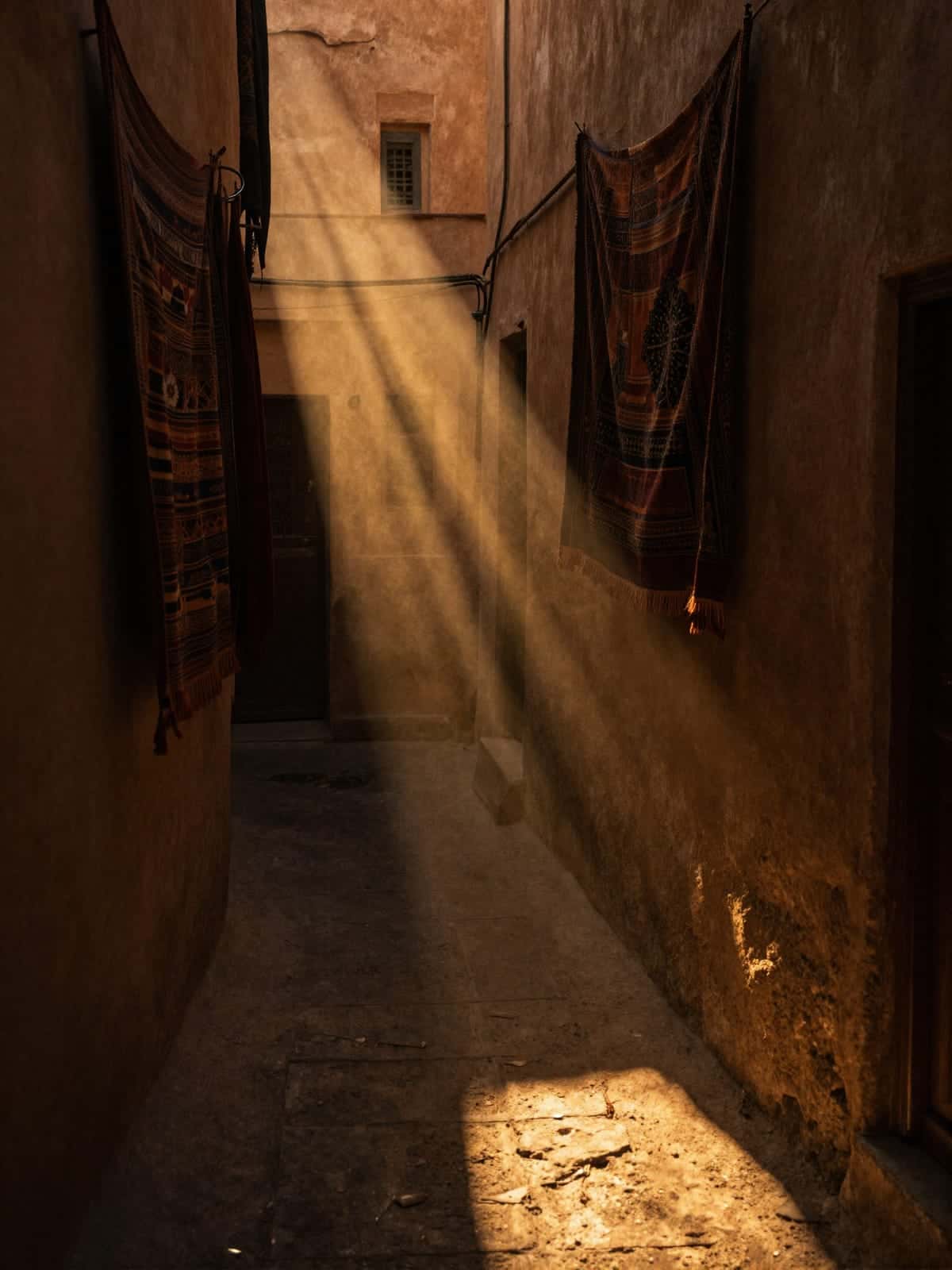
A guide leads you into the heart of the medina, because alone you truly get lost. You visit the Bou Inania Madrasa, a 14th-century Marinid jewel of cedar, carved plaster and zellige; you pass Al-Qarawiyyin University, founded in 859 by Fatima al-Fihri and held to be the oldest still operating in the world. Then your nose warns you before your eyes: the Chouara tanneries, a honeycomb of stone vats where hides are still dyed with lime, pigeon guano and pomegranate, exactly as in the Middle Ages. They hand you a sprig of mint for the smell, and you watch men standing knee-deep in colour. The point isn't the explanation; it's the wandering. At dusk the lanes empty and only the lamps remain.
Overnight · riad in the Fes medina
- Bou Inania Madrasa
- Al-Qarawiyyin
- Chouara Tanneries
- Nejjarine Fondouk
- The Blue Gate
Day 06 · Merzouga · ~713 m
Cedars, Monkeys and the Ziz Valley to the Dunes
Fes → MerzougaDrive — approx. 290 mi / ~8h
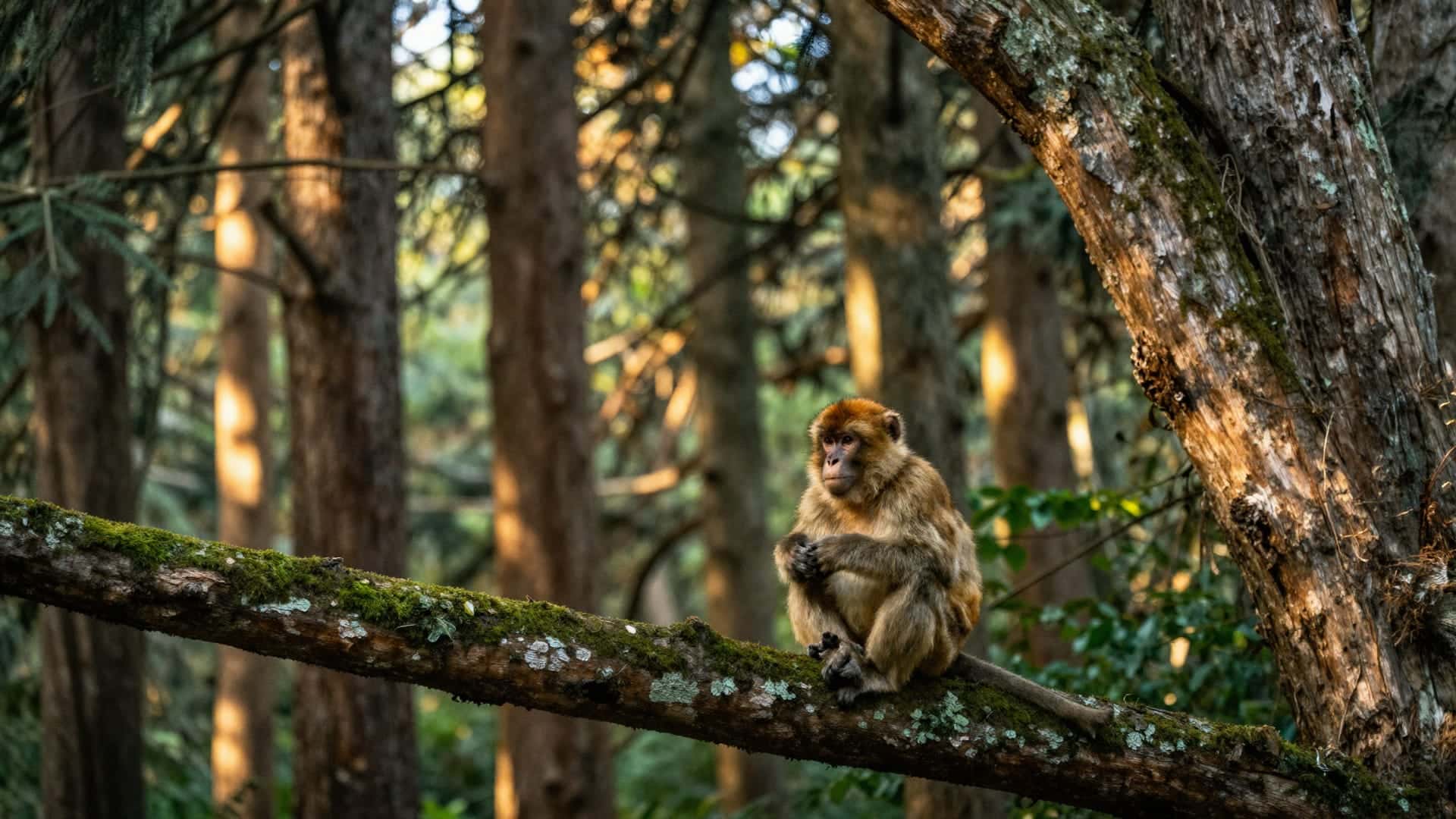
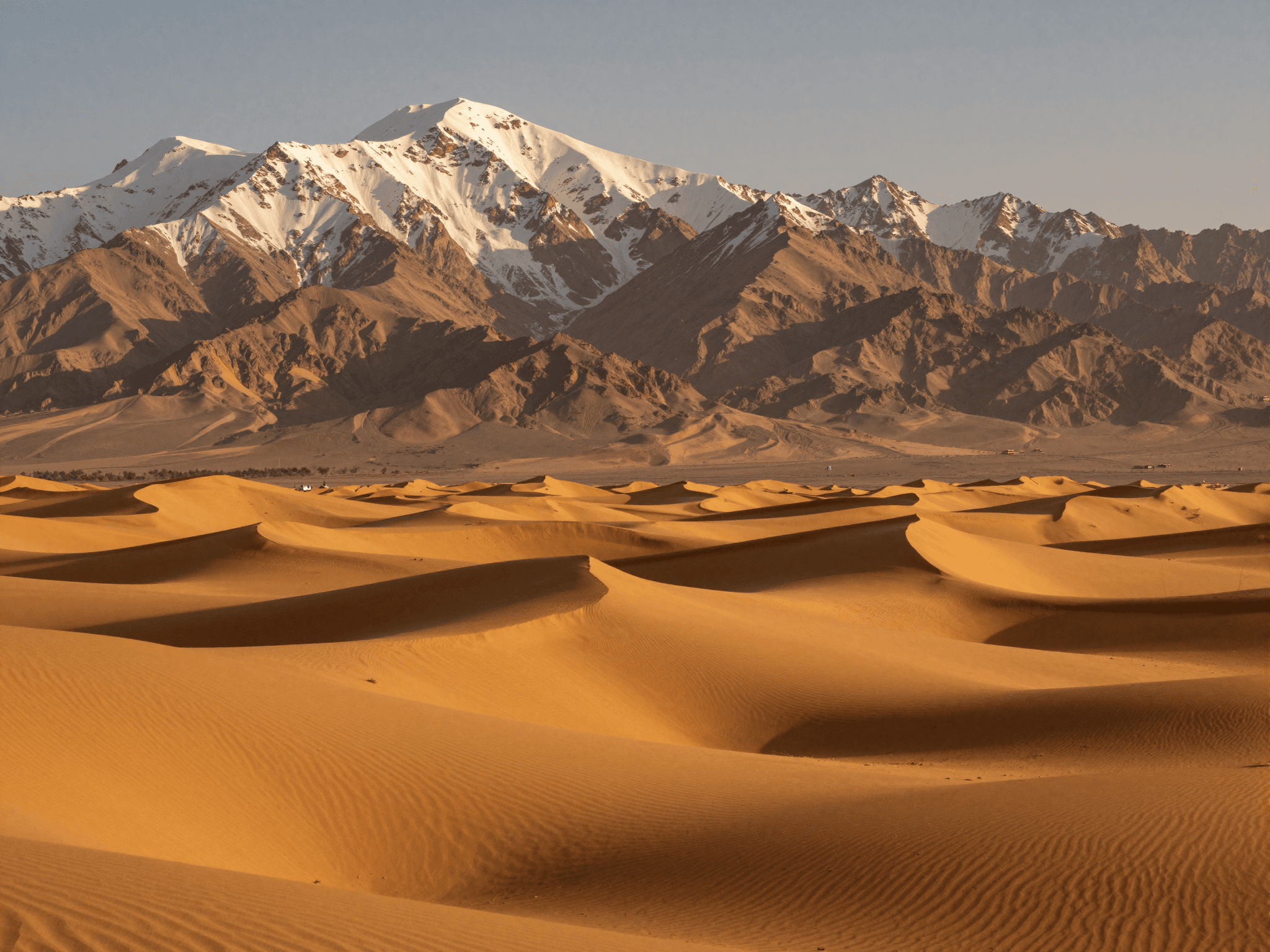
In a single day you cross three Moroccos. First Ifrane, a town of steep roofs and flower beds built by the French in the 1930s, so tidy it earned the nickname 'Moroccan Switzerland'; a little beyond, the cedar forest of Azrou, where Barbary macaques — the only wild primates north of the Sahara — come down to study you among thousand-year-old trees. Then the long descent along the Ziz Valley, a canyon where the river draws a green snake of palms at the foot of bare rock. The light changes, the air warms, and suddenly the road opens onto the desert. You reach Merzouga, mount a dromedary, and the caravan carries you to camp as the sun touches the crests of the erg.
Overnight · tented camp among the Erg Chebbi dunes
- Ifrane
- Azrou Cedars & Macaques
- Ziz Valley
- Caravan to Camp
Day 07 · Merzouga · ~713 m
The Heart of Erg Chebbi: Nomads and Gnawa
Merzouga circuitDrive — 4×4 circuit around the erg
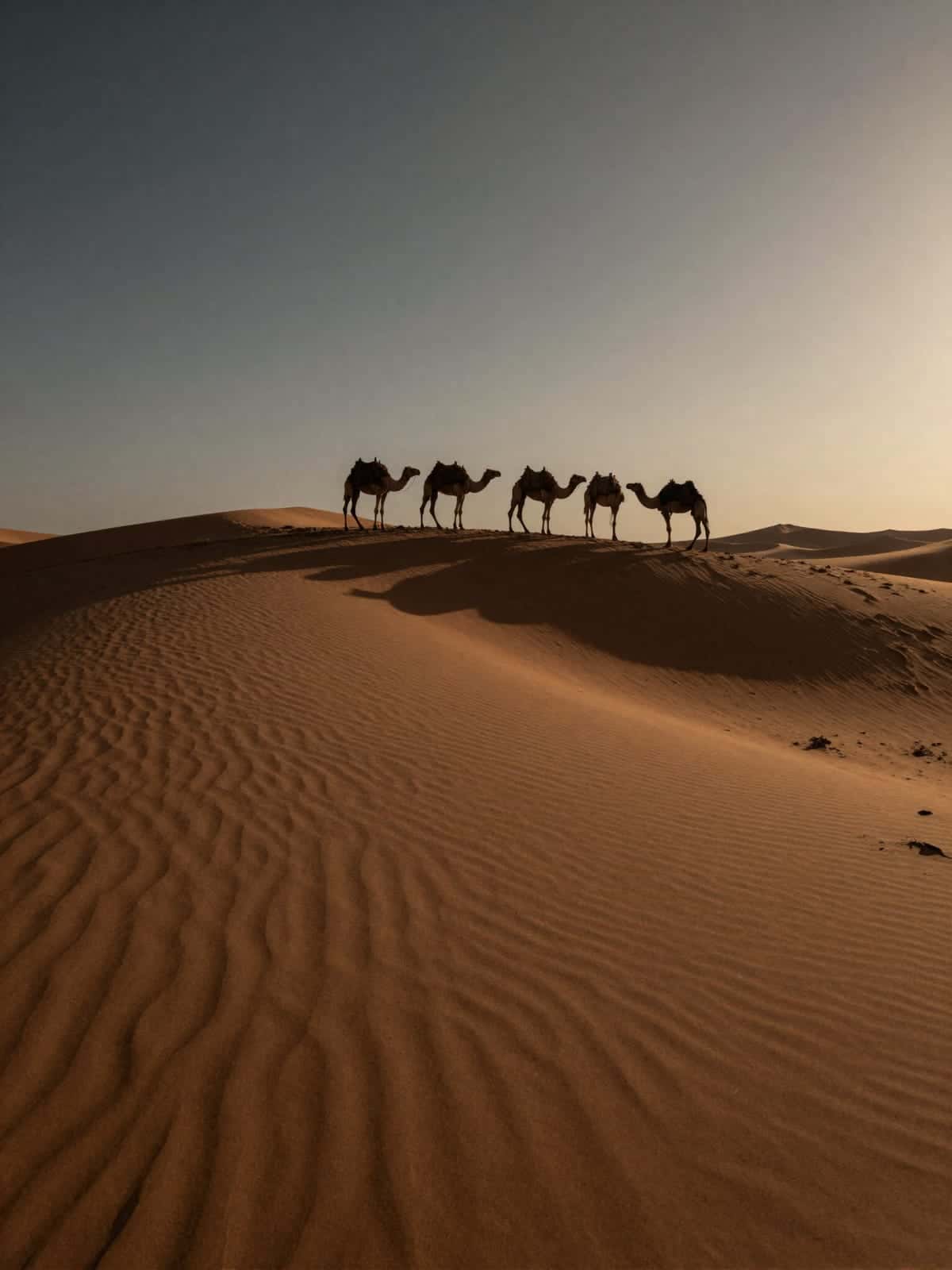
A whole day inside the great sea of sand, aboard a 4×4 that slides between the dunes. You visit Khamlia, a village of Malian descendants where the Gnawa brotherhood plays its dark rhythms as both exorcism and celebration; you stop with a nomad family still living off goats and camels under wool tents, and share a tea that is a ceremony in itself. You pass the abandoned Mifiss mines and hunt for fossils three hundred million years old, from when this was seabed. The 'Berber pizza' — madfouna baked under the sand — is lunch. At sunset you climb the highest crests with a sandboard or simply on bare feet, while the shadows of the dunes stretch out to infinity.
Overnight · camp or lodge in Merzouga
- Khamlia Village
- Nomad Family
- Mifiss Mines
- Sahara Fossils
- Sandboarding the Dunes
Day 08 · Dades Valley · 1,562 m
From the Dunes to the Dades by the Road of Kasbahs
Merzouga → DadesDrive — approx. 185 mi / ~5h
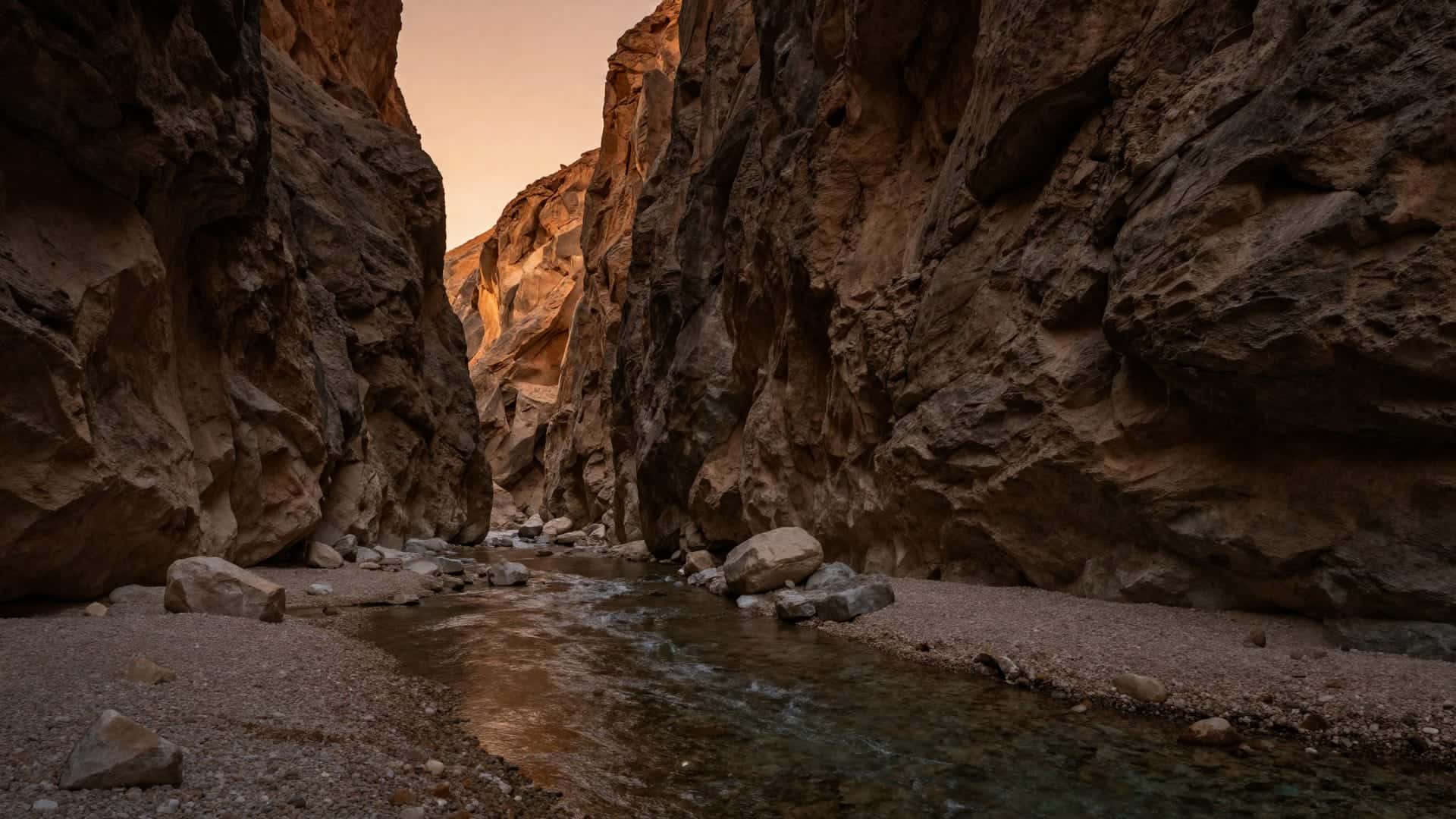
After sunrise and breakfast you leave the erg and head west along the legendary 'road of a thousand kasbahs', which follows the old caravan tracks from court to court. You stop at Rissani for the souk, then the land turns lunar between Alnif and Tinghir until the palm groves return. You climb the Todra Gorge, where the red walls press in on the river, and go on toward the Dades Valley among mud fortresses that once controlled the passage of goods — dates, salt, gold — to the north. Every kasbah is a family, a story of crenellated towers and hidden courtyards. When you reach Boumalne Dades, the low sun turns the packed earth to red gold.
Overnight · hotel or kasbah in the Dades Valley
- Rissani Souk
- Road of a Thousand Kasbahs
- Todra Gorge
- Skoura Oasis
Day 09 · Ouarzazate · 1,151 m
The Valley of Roses, Skoura and Ouarzazate
Dades → OuarzazateDrive — approx. 85 mi / ~3h
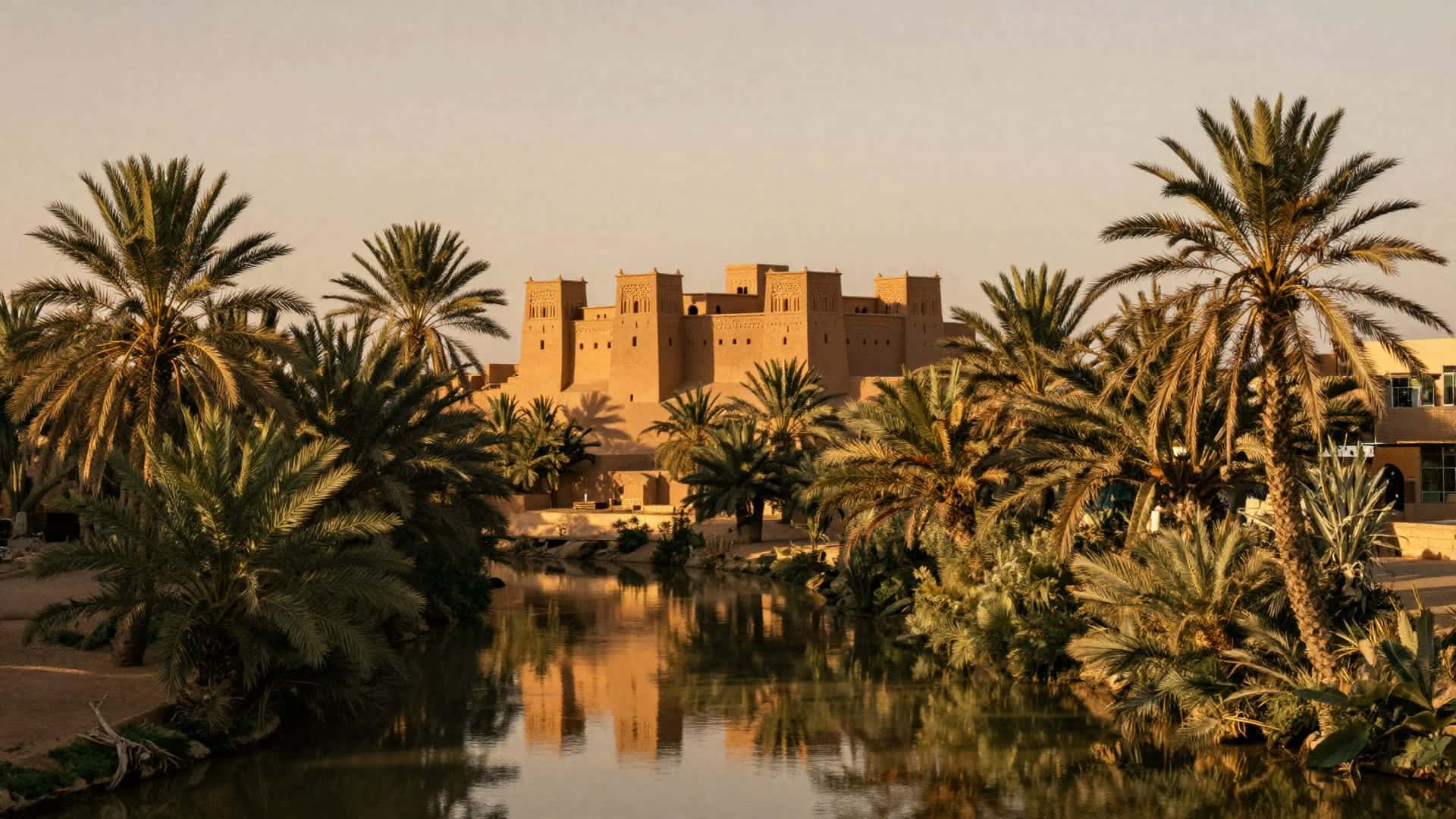
A shorter, gentler day given to the oases. You climb the Valley of Roses around Kelaat M'Gouna, where every May a festival honours the Damask rose and from a thousand hedges comes the rosewater that scents the south. Then you reach Skoura, the 'oasis of a thousand palms', where the Amridil kasbah — the one printed on the fifty-dirham note — mirrors itself in the water among the palm groves: a labyrinth of raw-earth rooms telling centuries of Berber life. In the afternoon you arrive at Ouarzazate, the 'gate of the desert', dominated by the Kasbah Taourirt of the Glaoui pasha and home to the Atlas Studios. In the evening, within the walls of a kasbah-hotel, the slow rhythm of the south wraps around you.
Overnight · kasbah-hotel in Ouarzazate
- Valley of Roses
- Amridil Kasbah, Skoura
- Kasbah Taourirt
- Atlas Studios
Day 10 · Marrakech · 466 m
Ait Ben Haddou and the Pass to Marrakech
Ouarzazate → MarrakechDrive — approx. 125 mi / ~4h
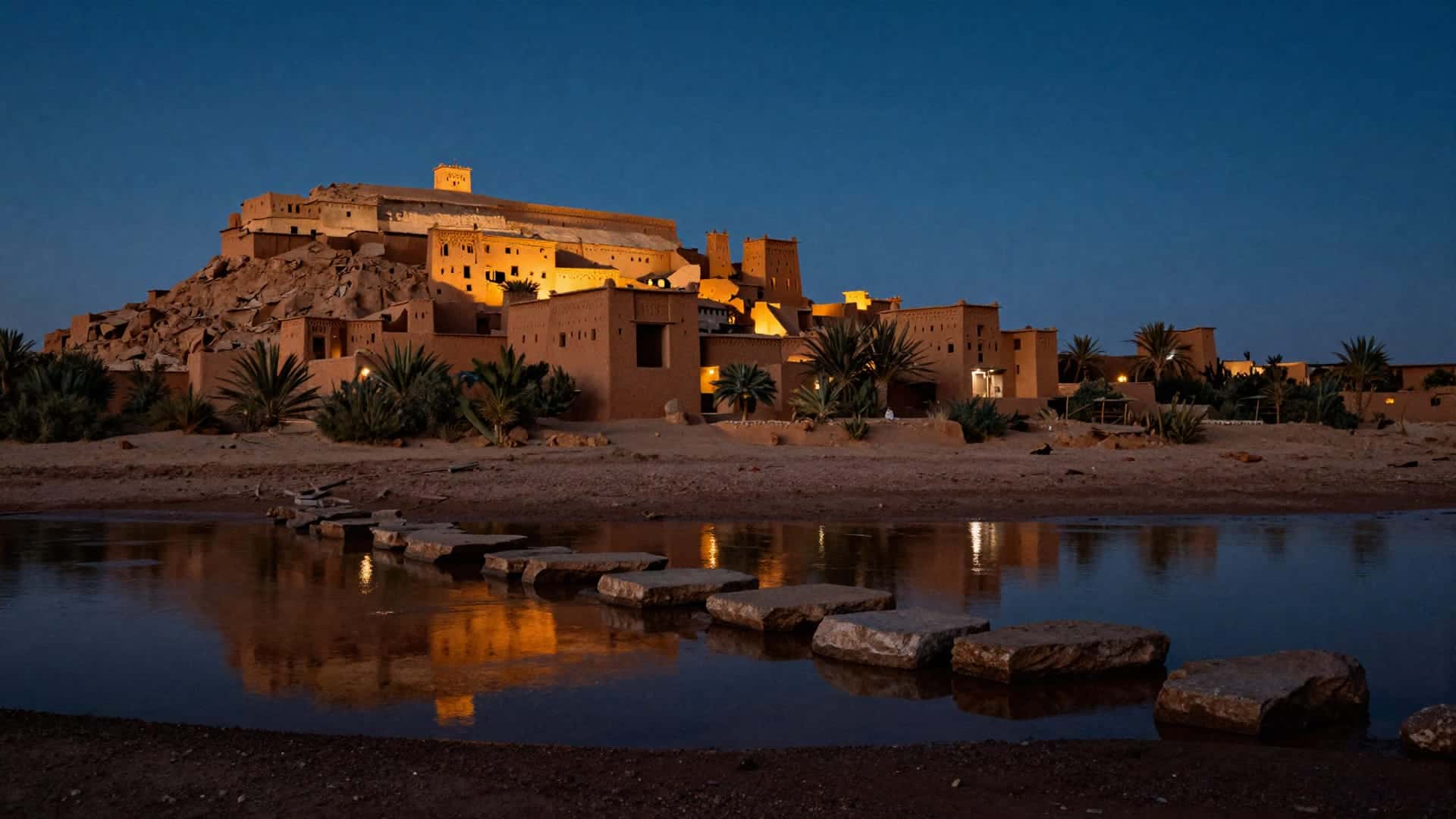
The last great day of driving climbs back through the Valley of Roses and passes Skoura, the oasis of a thousand palms where the Amridil kasbah — the one printed on the fifty-dirham note — mirrors itself in the water. You reach Ait Ben Haddou unhurried, with time to climb to the granary at the top of the ksar and grasp why filmmakers from around the world have returned here for sixty years: the light on raw earth has no equal. Then the car turns toward the High Atlas and takes on the Tizi n'Tichka, the hairpins, the sellers of amethyst and fossils at the switchbacks, the views opening at every bend. You descend to the Marrakech plain as the sun sets; the Red City waits with its lanterns.
Overnight · riad in Marrakech
- Amridil Kasbah, Skoura
- Ait Ben Haddou (UNESCO)
- Tizi n'Tichka Pass
- Return to Marrakech
Day 11 · Marrakech · 466 m
Marrakech in Depth: Palaces and Gardens
Drive — on foot within the medina
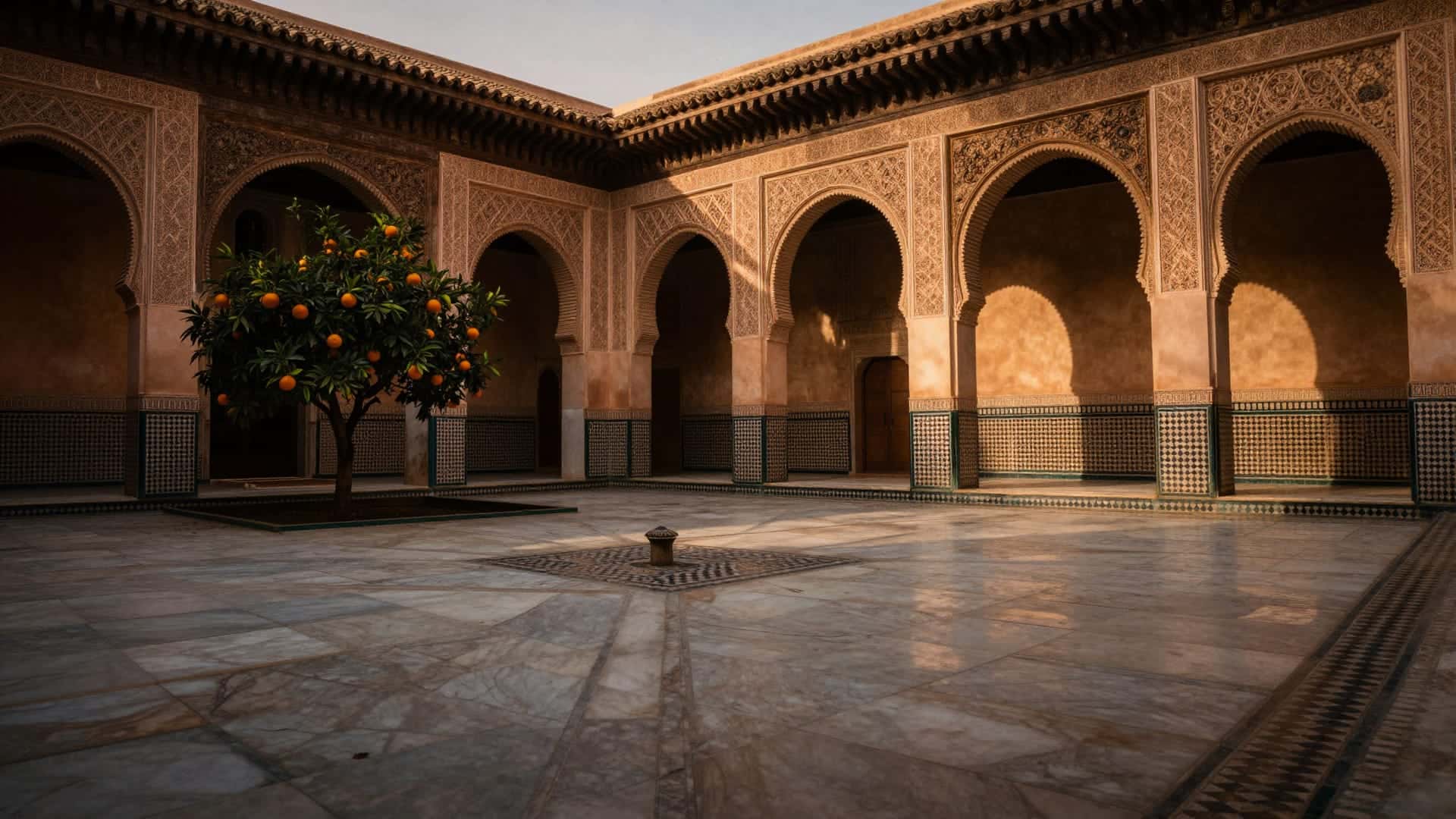
With a guide you cross the Marrakech the walls keep hidden: the Koutoubia, whose 12th-century minaret was the model for Seville's Giralda; the Bahia Palace, eighty rooms willed by a grand vizier so that no two would be alike; the Saadian Tombs, sealed for centuries and rediscovered only in 1917 from an aerial photograph. You lose yourself in the maze of the souks — copper, leather, spices in neat cones — where every trade keeps its own lane. In the afternoon the cobalt green of the Majorelle Garden cools the eyes, before the square lights up again. At sunset you climb to a terrace: the rooftops become a red sea, and the snow-topped Atlas closes the horizon.
Overnight · riad in the Marrakech medina
- Bahia Palace
- Saadian Tombs
- Majorelle Garden
- Dyers' Souk
- Ben Youssef Madrasa
Day 12 · Essaouira · ~5 m
To the Ocean: Windswept Essaouira
Marrakech → EssaouiraDrive — approx. 120 mi / ~3h
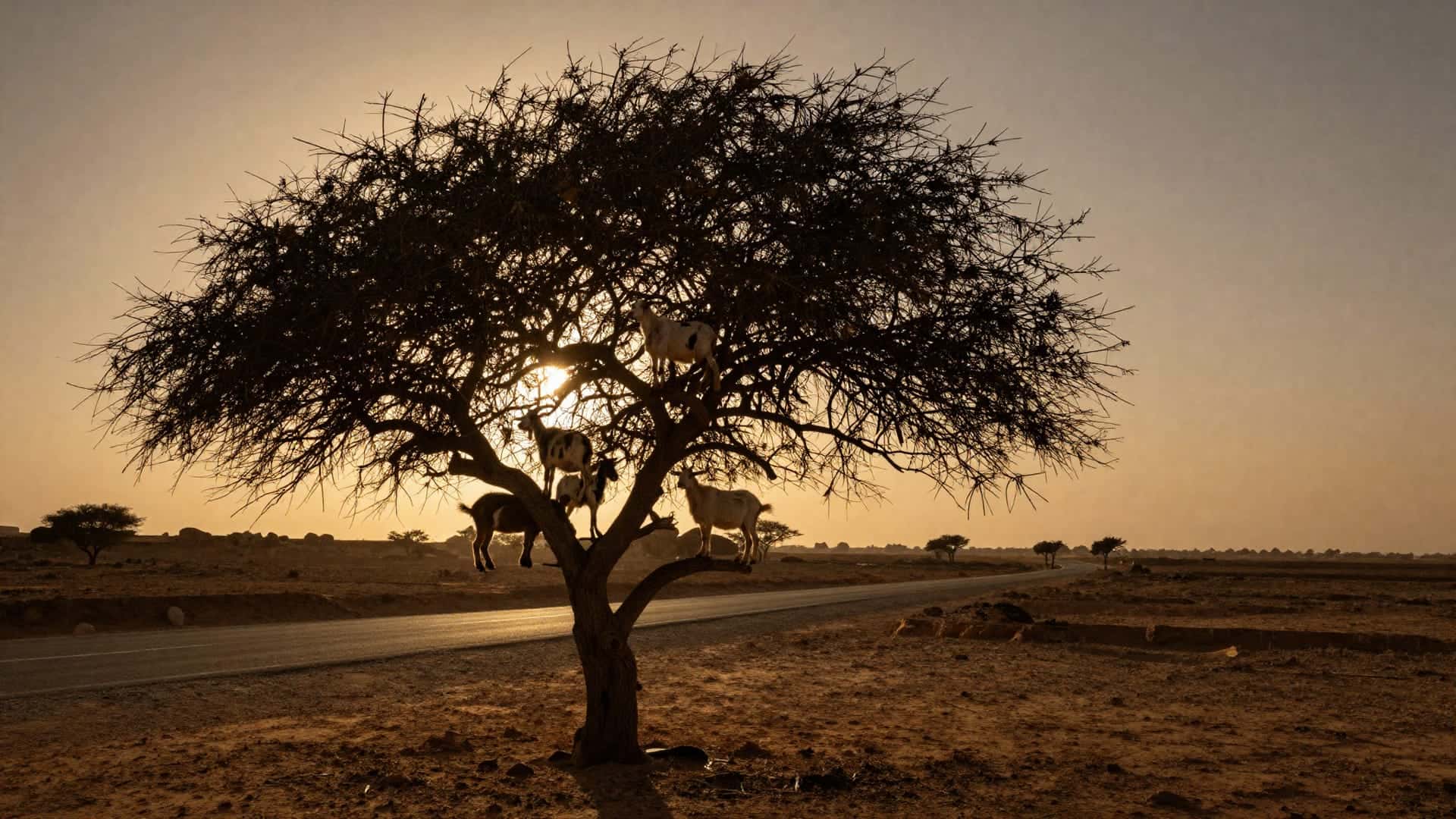
You leave Marrakech and cross a plateau of argan trees, the twisted trees goats sometimes climb; you stop at a women's cooperative where they still crack the nuts by hand for the precious oil. Then the air changes, turning damp and salty, and Essaouira appears: Portuguese ramparts hammered by the wind, a harbour full of blue boats and gulls, the battlements where Orson Welles shot his Othello and where later the hippie generation — Hendrix among them — sought refuge. The white-and-blue medina, a UNESCO site, is an airy maze of thuya-wood workshops and art galleries. You walk the ramparts as the Atlantic throws itself at the rocks and the sun drops straight into the water.
Overnight · riad in the Essaouira medina
- Skala Ramparts
- Fishing Harbour
- UNESCO Medina
- Argan Cooperative
Day 13 · Casablanca · ~30 m
The Atlantic Coast to Casablanca
Essaouira → CasablancaDrive — approx. 220 mi / ~5h
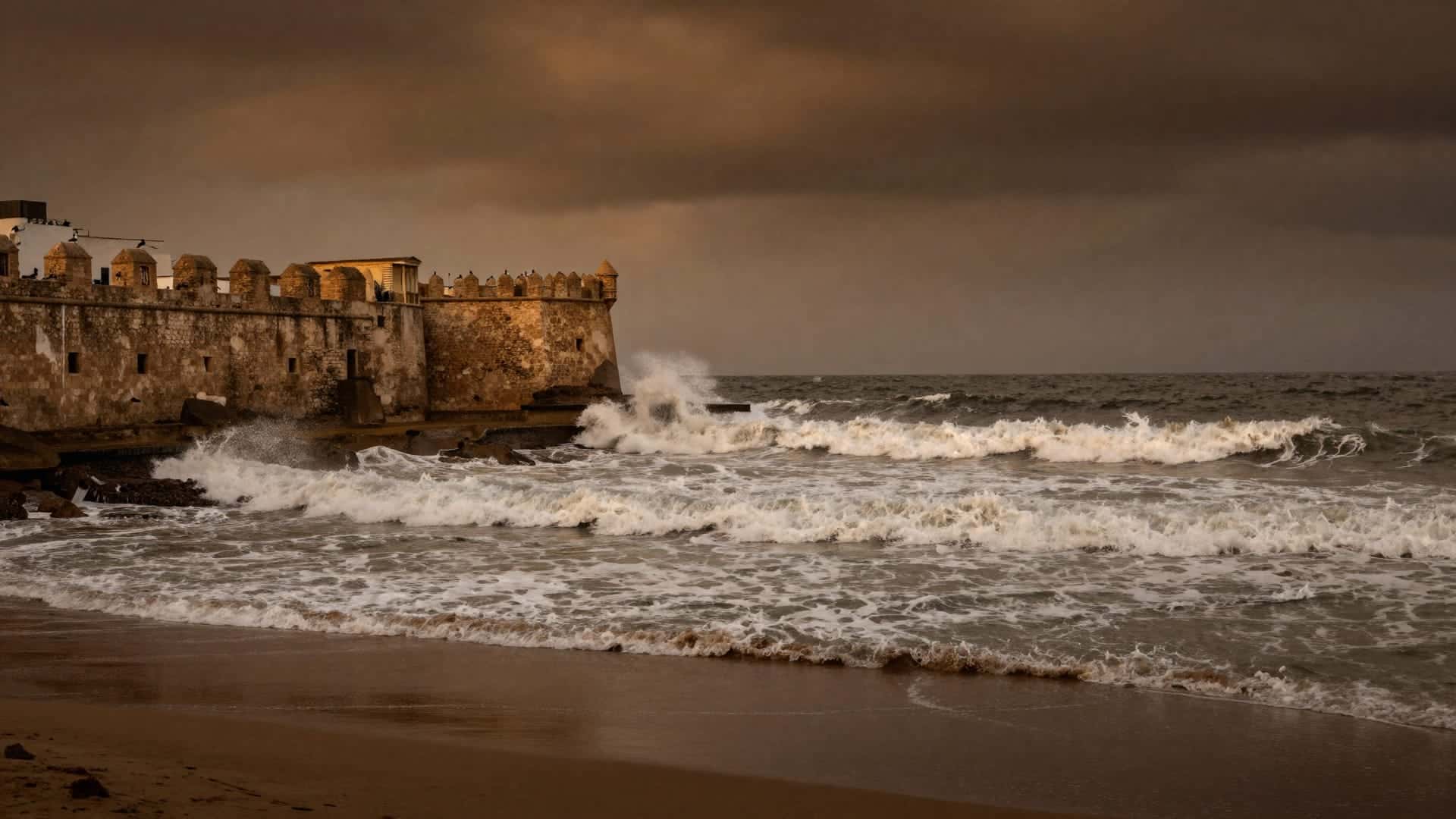
One last morning in Essaouira — a walk along the wind-battered Skala ramparts, a turn among the thuya-wood workshops — then you follow the Atlantic coast north. You stop at El Jadida, where the Portuguese built the fortress of Mazagan in the 16th century, a UNESCO site: its famous underground cistern, with columns reflected in a film of water, is a masterpiece of light that Orson Welles chose for his Othello. You continue along the ocean to Casablanca, where the grand loop closes. In the evening, on the Corniche, you watch the waves break as the sun drops into the water: fourteen days ago you were here, but the Morocco you carry now is another.
Overnight · hotel in Casablanca
- Essaouira Ramparts
- El Jadida Cistern
- Mazagan Fortress (UNESCO)
- Casablanca Corniche
Day 14 · Casablanca · ~30 m
Casablanca, the Last City
Drive — on foot and along the Corniche
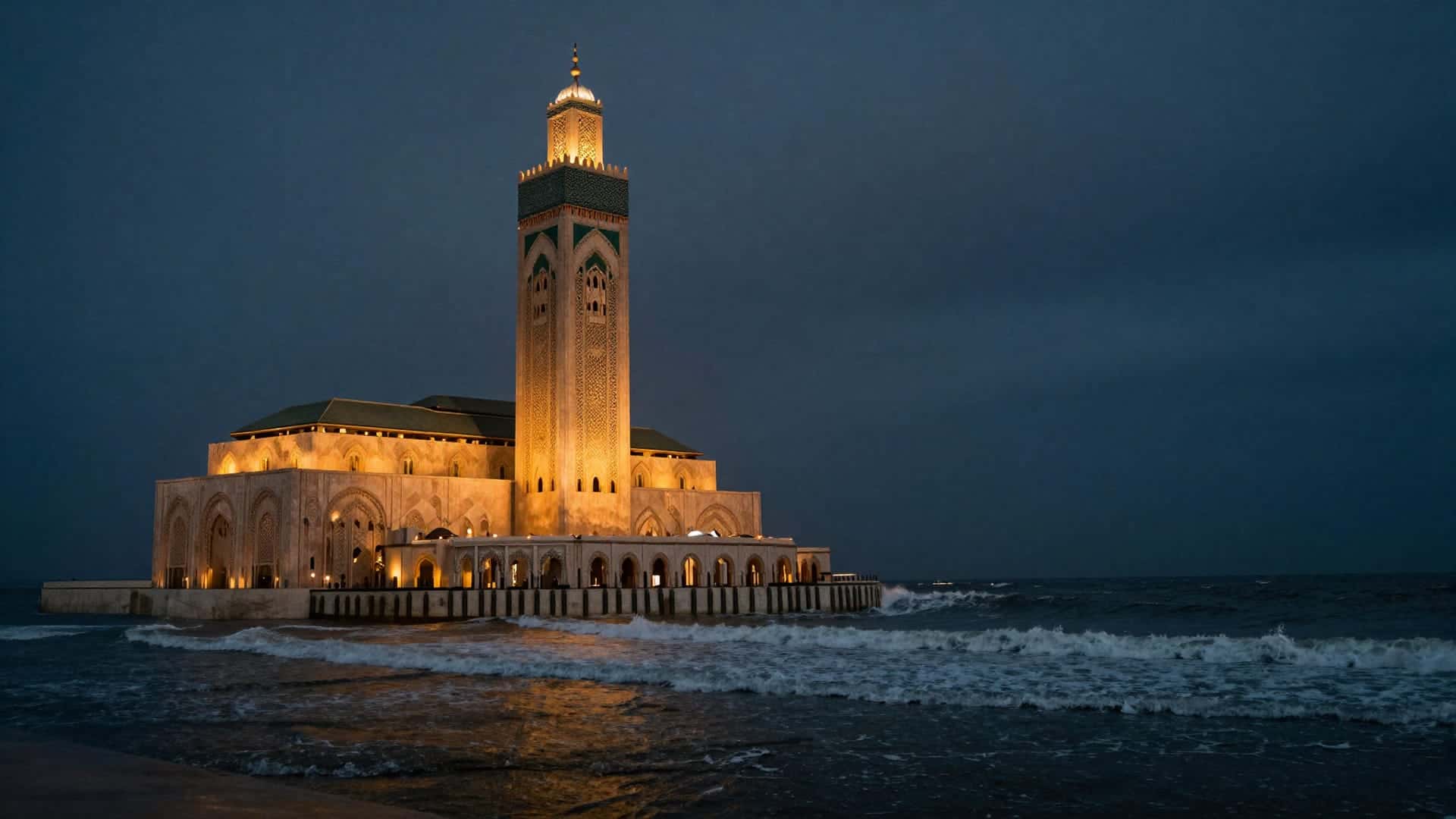
The last full day is given to Casablanca, the metropolis that closes and sums up the journey. You visit the Hassan II Mosque, completed in 1993: it stands partly over the water, has the world's tallest minaret and an interior of marble, cedar and glass that slides toward the ocean, able to hold twenty-five thousand worshippers. You stroll the Habous quarter, the 'new medina' built by the French in traditional style, among sweet shops and booksellers; then the Corniche, where the city breathes the Atlantic. It is the moment to look back: from the blue of Chefchaouen to the Erg Chebbi dunes, from the mosaics of Volubilis to the ocean at Essaouira, you have crossed all of Morocco. Tonight, the last dinner tastes of a happy reckoning.
Overnight · hotel in Casablanca
- Hassan II Mosque
- Habous Quarter
- The Corniche
Day 15 · Casablanca · ~30 m
Farewell to the Ocean
Drive — transfer to Mohammed V airport
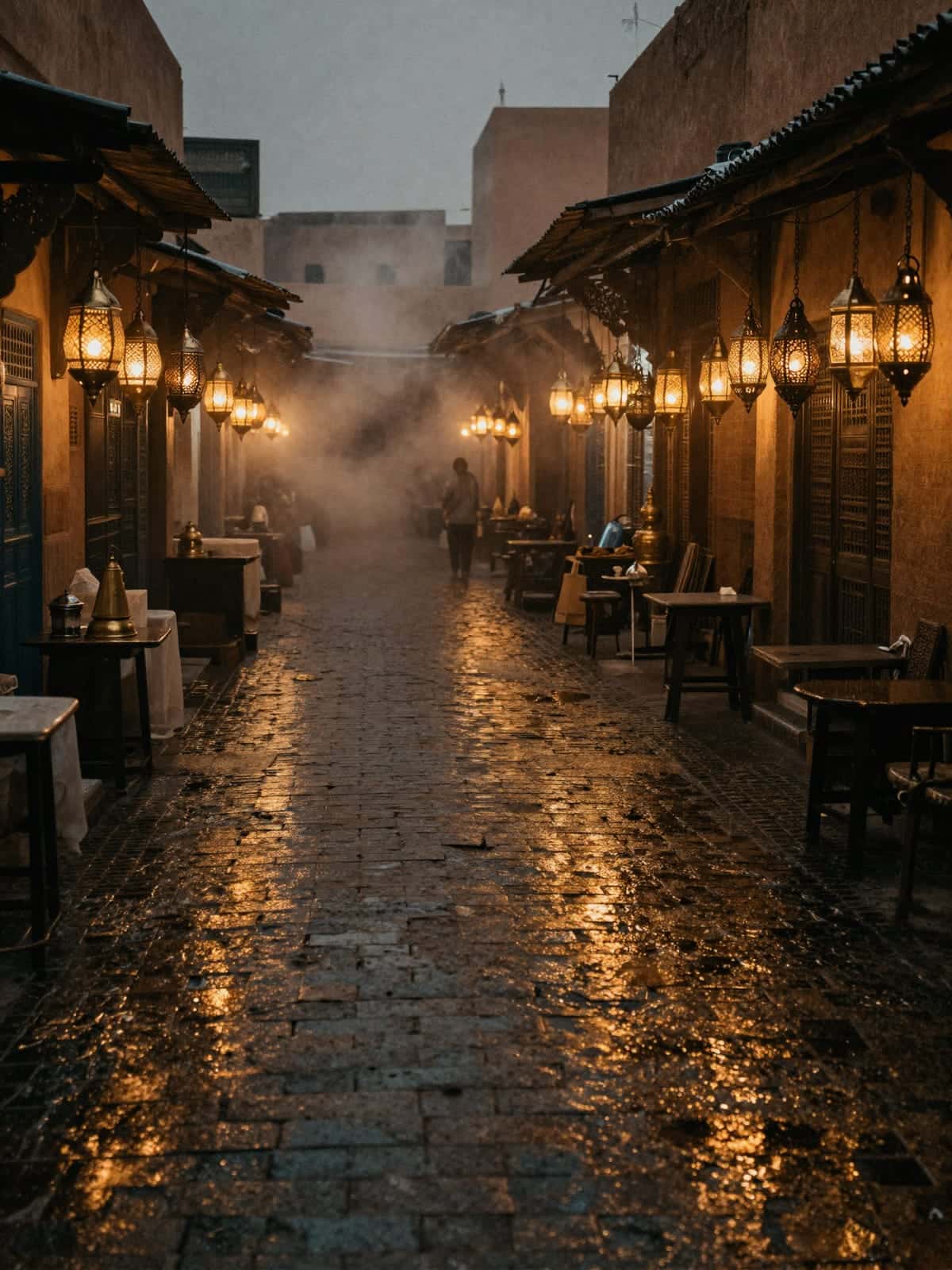
Fifteen days ago you set foot in Morocco without knowing how vast it was; now you leave with a whole country in your eyes. On the last morning, if the flight allows, there is time for a coffee over the ocean before the transfer to Mohammed V airport. You have seen four imperial cities, the blue of Chefchaouen, the Roman ruins of Volubilis, the thousand-year-old medina of Fes, the great Sahara dunes, the road of a thousand kasbahs and the ocean at Essaouira: no other itinerary touches so many different Moroccos. The country, they say here, is never visited only once; and as the Atlantic coast falls away beneath the wing, you know two weeks were a great deal, and at the same time not enough.
- Coffee over the Ocean
- Airport Transfer
Distances, driving times and properties shown are approximate: every figure is reconfirmed in detail at booking.
What the journey includes
Included
- Private, air-conditioned 4WD SUV/minivan
- Fuel
- Vehicle insurance
- Italian-speaking driver
- Pick-up and drop-off
- Local tour guide
- Accommodation as shown in the itinerary
- Camel ride in the Merzouga desert (one camel per person)
- Overnight stay in a Desert Luxury Camp
- Private rooms — tents and breakfast
- One-of-a-kind experiences
Not included
- Lunch
- Drinks
- Travel insurance
- Entrance tickets
- Tips
- Extras
You may also like
Contact
Your Morocco begins with a message
Tell us your dates, dreams and curiosities: together we'll sketch the perfect itinerary, no strings attached.
“we touch minds and hearts”